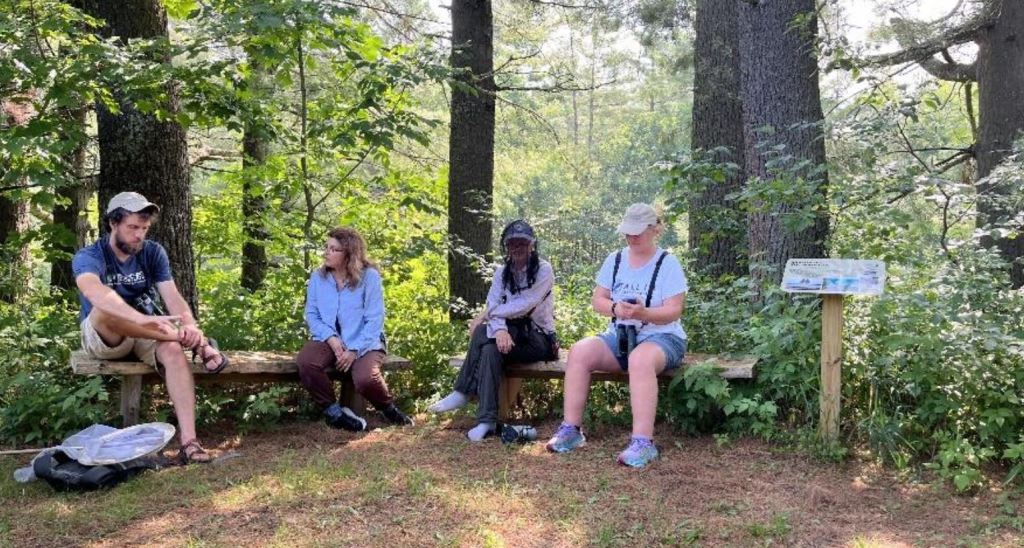
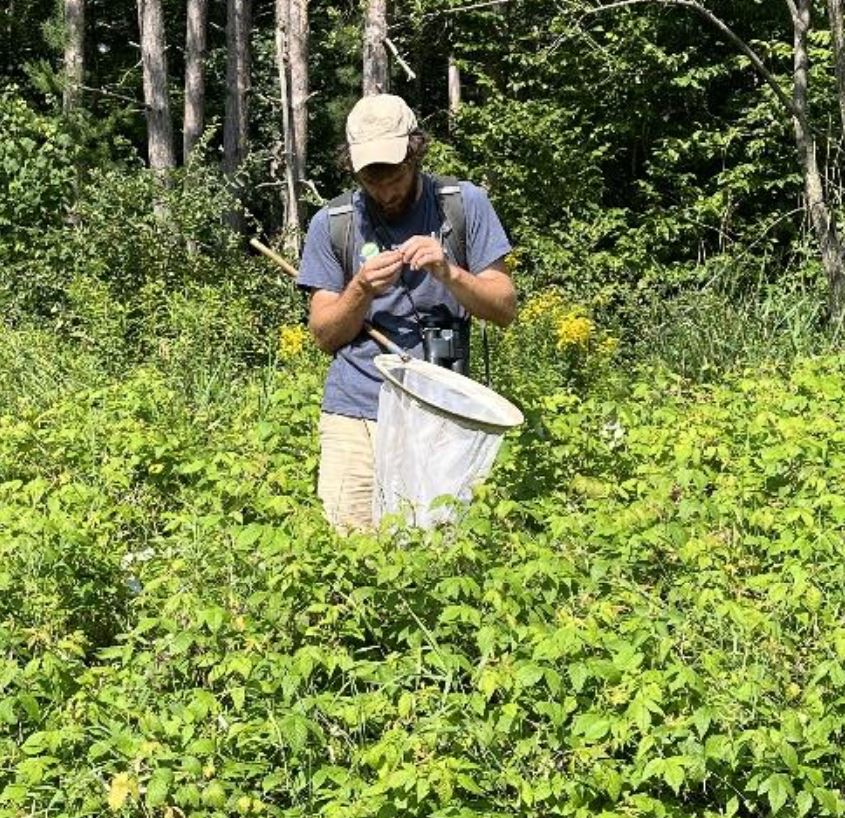
Eight people turned out for a fascinating walk with bee expert Spencer Hardy of the Vermont Center for Ecostudies. Spencer caught bees with a sweep net, to identify them and then, so we could look at them, placed them safely in a glass jar; then they were released unharmed. See the VCE website (At This Link and At This Link) for more information on the statewide census for bees, which Spencer is directing.
Vermont Center for Ecostudies website, bee information
stateofbees.vtatlasoflife.org/
val.vtecostudies.org/projects/vtbees/vermont-bumble-bee-species/
SPECIES WE OBSERVED TODAY
- Half black Bumblebee – Bombus vanagans; Perhaps the commonest bumblebee in Vermont. val.vtecostudies.org/projects/bumble-bee-atlas/bombus-vagans/
- Tri-colored bumblebee (much smaller than the ones I have seen -spencer says those were probably queens later in seasson
val.vtecostudies.org/projects/bumble-bee-atlas/bombus-ternarius/ - Small carpenter bee – Ceratina – They burrow in raspberry canes and hollow them out to lay their eggs and provision their young.
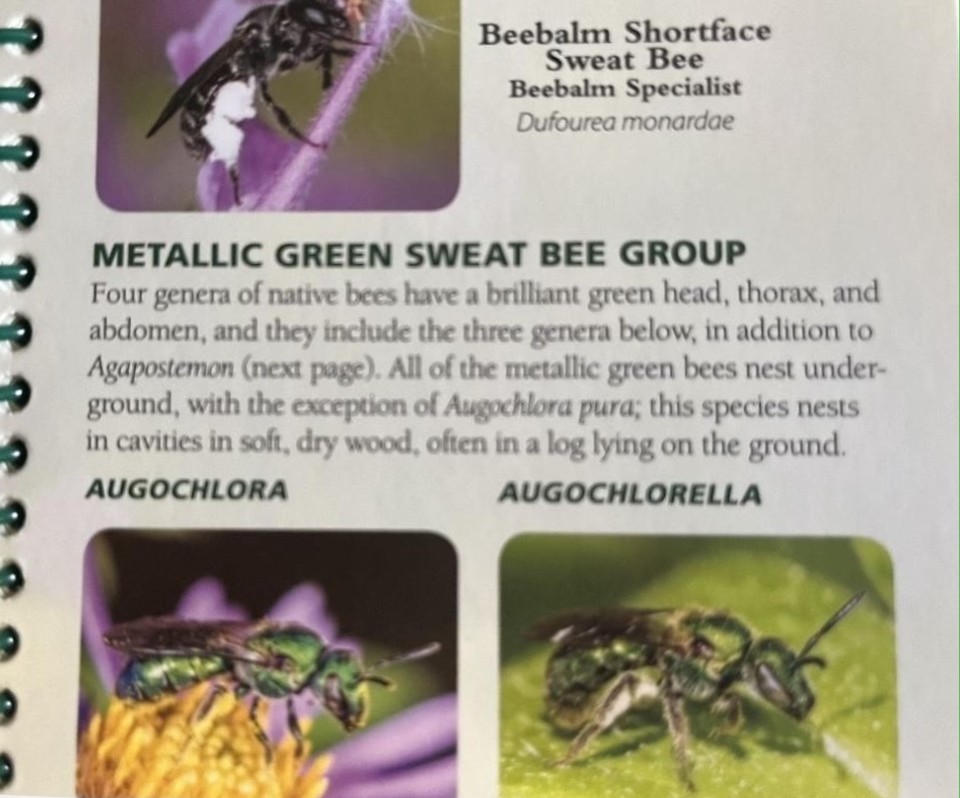
- Metallic green sweat bee group – Dufourea . Long antennae, slender body
- Calligrapher bee (stubby antenna)
- Monarch Butterfly egg on Milkweed (very small, first instar)
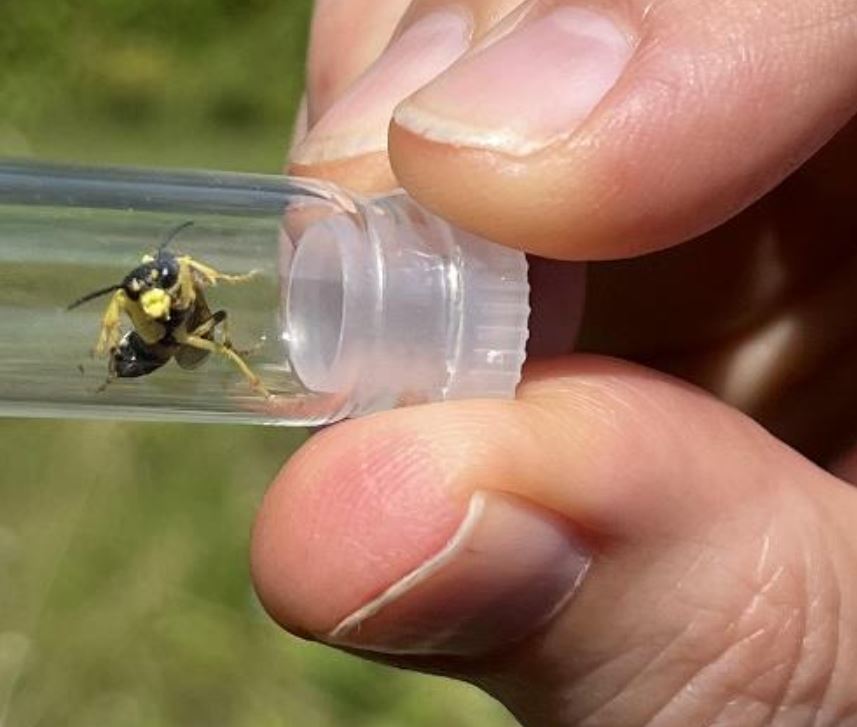
- Bee wolf – attacks bees in midair and injects its larva!
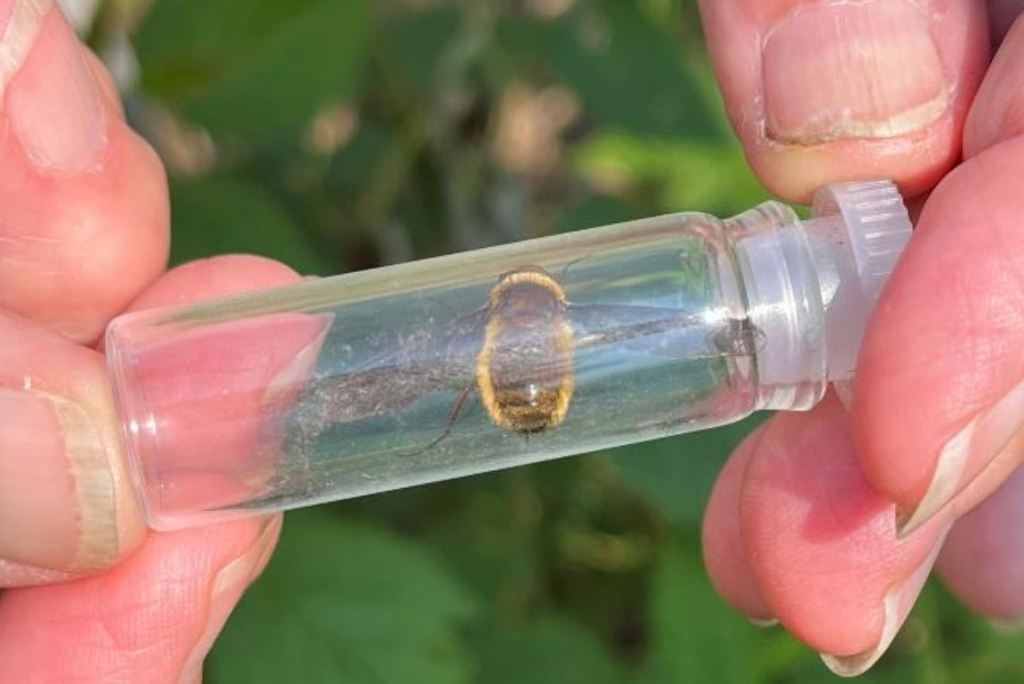
- Bee fly
- Yellow faced masked bee – Hylaeus. The smallest bee. Same family as cellophane bee
- European Honey Bee
- Cellophane Bees have burrows in the Sandblow, but are not visible this time of year – not until spring when the adults hatch from the eggs (then larvae) laid in burrows last April
 The Peter A. Krusch Nature Preserve - 316 North Cambridge Road, Cambridge, VT 05444