
The Sandblow Through Time
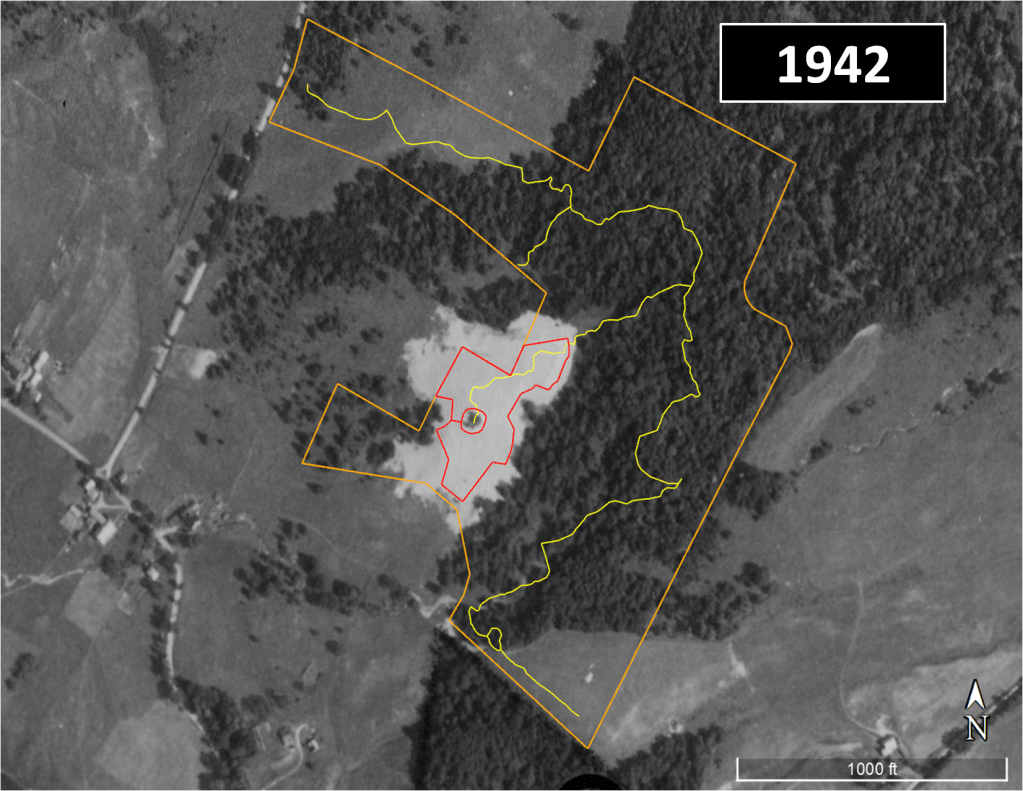
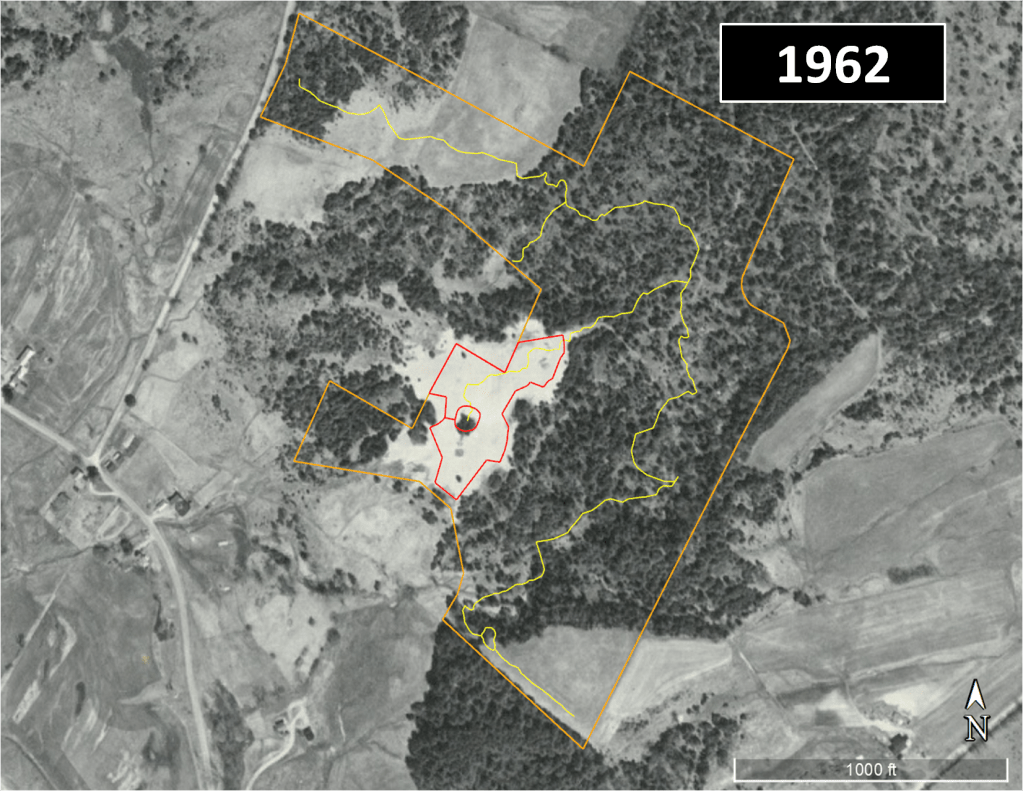
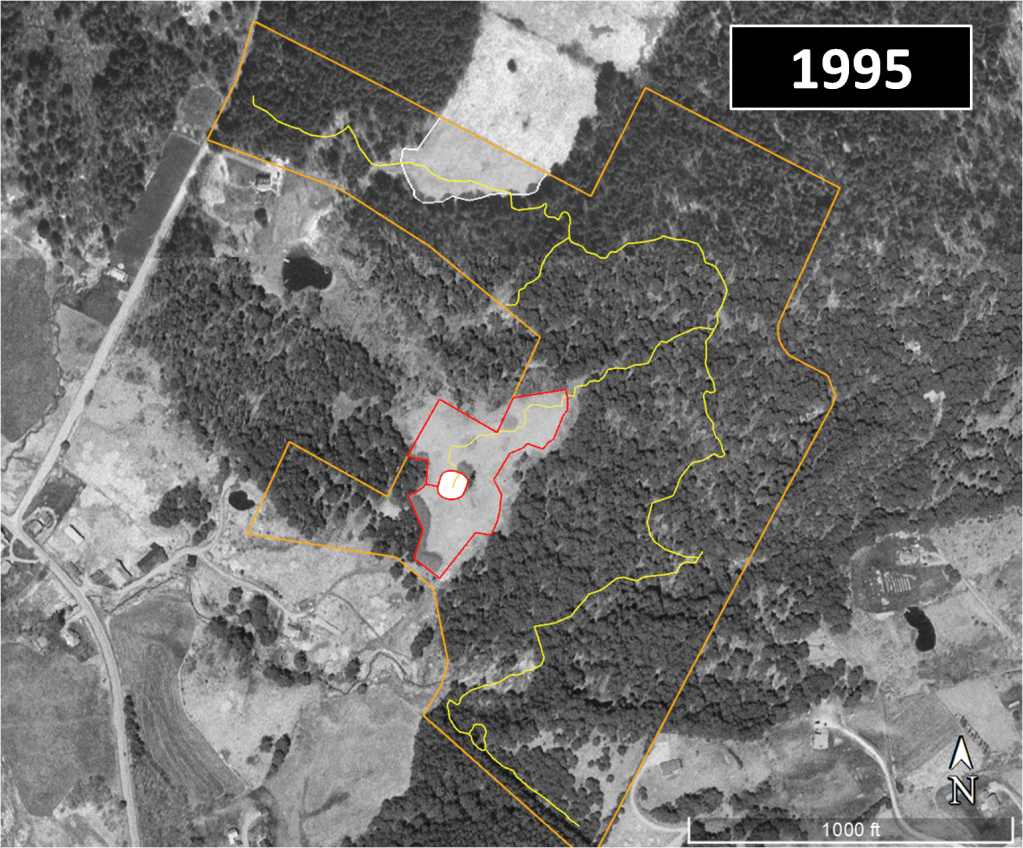
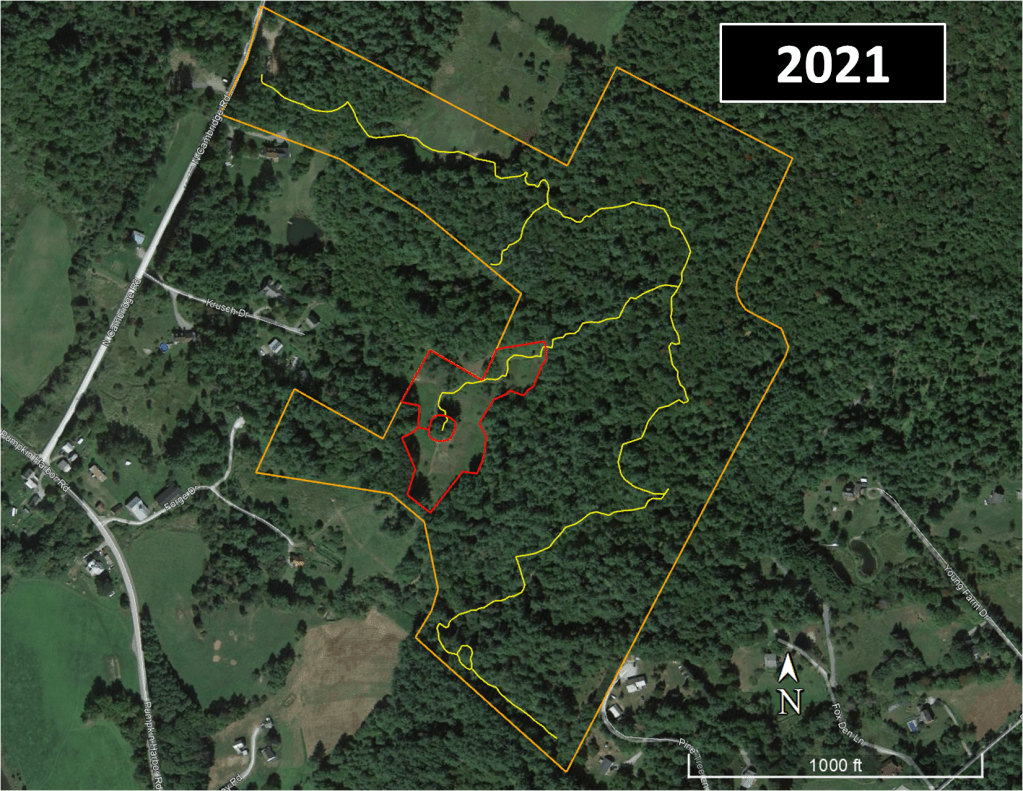
Here are four aerial photographs of the sandblow.
The first is dated 1942 that shows the sandblow perhaps at its worst after years of inappropriate farming practices. The last picture, 2021, shows the sandblow fully revegetated.
Learn more about Sandblows.
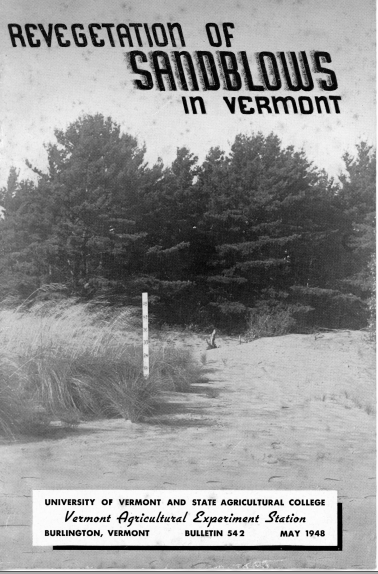
Revegetation Of Sandblows In Vermont [PDF at this link]
Kelly, J.B. and Varney, K.E. and Midgley, A.R.
1948
Agricultural Experiment Station, University of Vermont and State Agricultural College
en.wikipedia.org/wiki/Saltation_(geology)
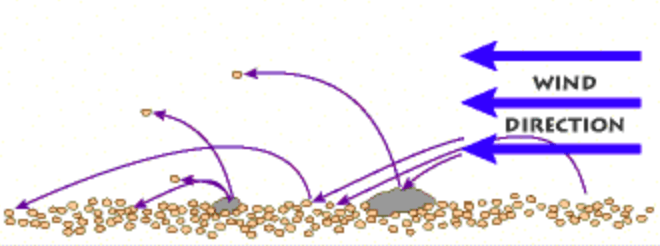
A 2008 study found that saltating sand particles induces a static electric field by friction. Saltating sand acquires a negative charge relative to the ground which in turn loosens more sand particles which then begin saltating. This process has been found to double the number of particles predicted by previous theory.[7] This is significant in meteorology because it is primarily the saltation of sand particles which dislodges smaller dust particles into the atmosphere. Dust particles and other aerosols such as soot affect the amount of sunlight received by the atmosphere and earth, and are nuclei for condensation of the water vapour.
Sand hitting sand is more likely to stick; sand hitting a more coherent surface is more likely to bounce. This feedback loop helps sand accumulate to create dunes.
 The Peter A. Krusch Nature Preserve - 316 North Cambridge Road, Cambridge, VT 05444